phonostack builds infrastructure for sound in a world where computation listens, speaks, generates, edits, organizes, and performs — an ecosystem of tools for designing, listening, generating, organizing, sculpting, and automating sound across creative and computational workflows.
// now generatingnow listeningnow sculptingnow rememberingnow performingnow remembering
/ Products
05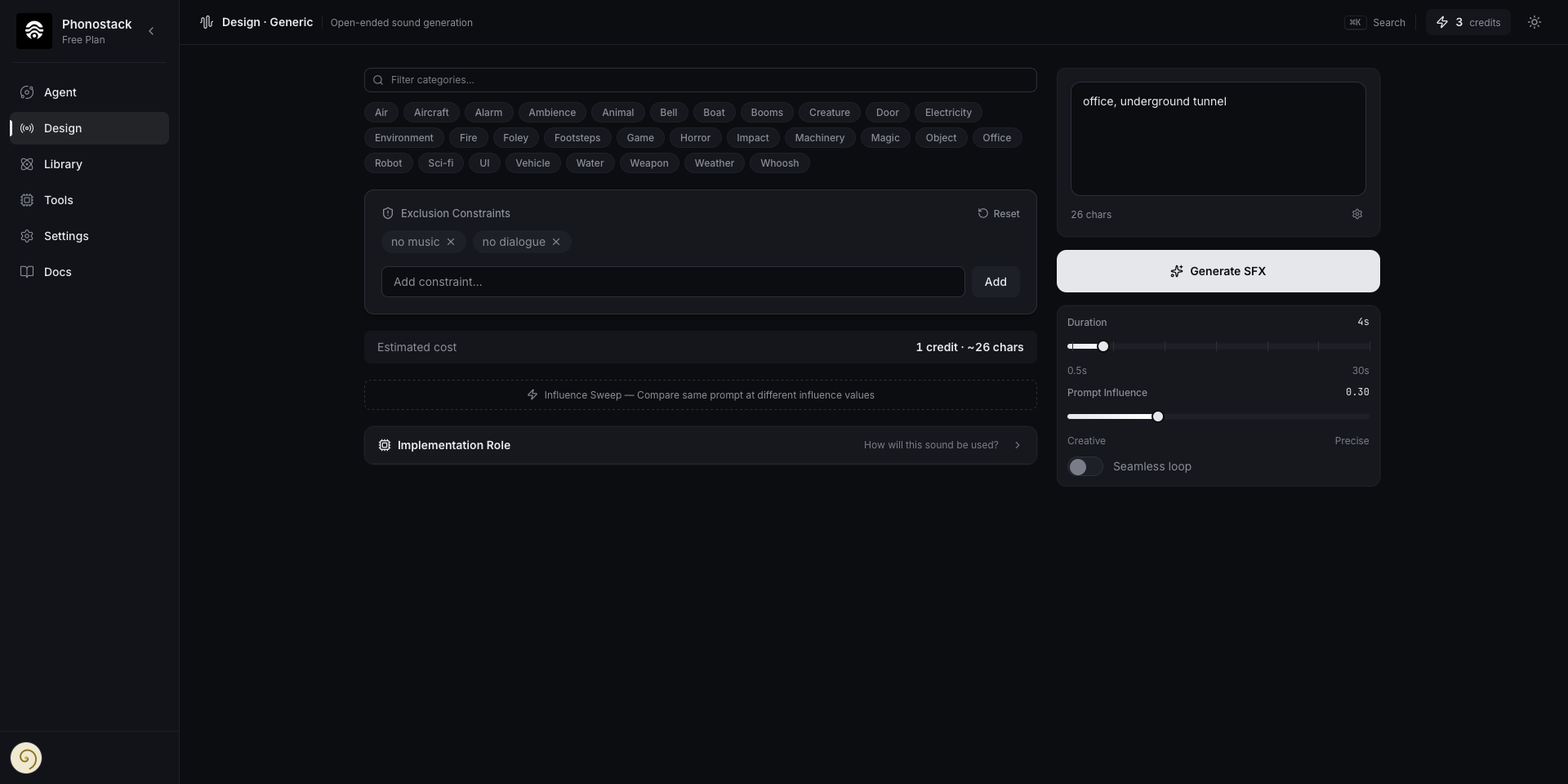
/ Principles
04- 01Sound is infrastructure.Not a feature, not an asset. The substrate on which agents, models, and humans now act.
- 02Listening precedes generation.A system that cannot listen cannot decide. We treat audition as a first-class capability.
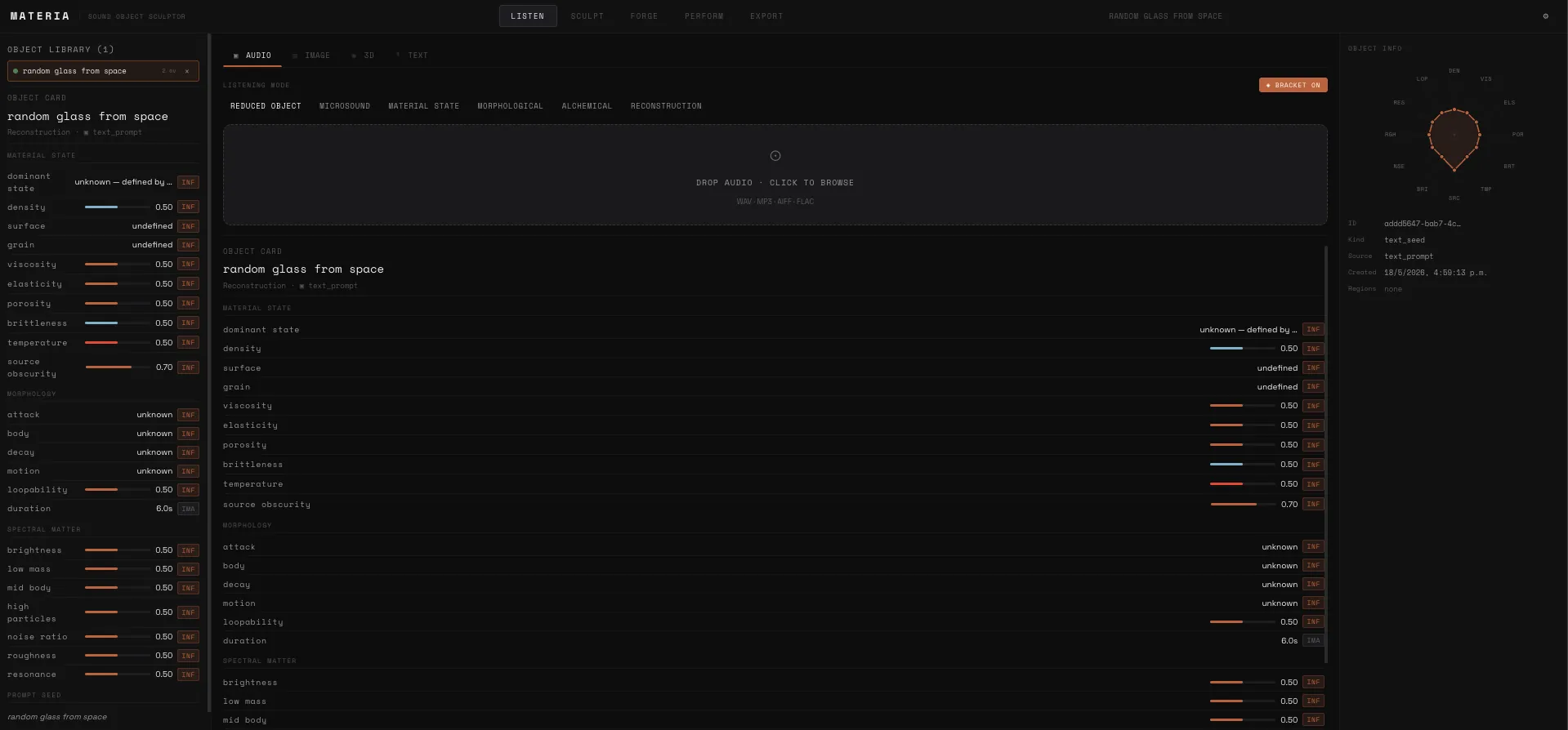
- 03Material before performance.Sound is matter. Granular, spectral, plastic. Tools should expose its interior, not just play it back.
- 04Memory over output.Every generation, prompt, and gesture is held. The library is alive, navigable, and shared.
/ Concepts
Key terms- Sound
- Material substance
- Listening
- Computational perception
- Agentic
- Human · model · machine
- Generative
- Emergence from systems
- Memory
- Sonic cartography
- Stack
- Layered composition
/ Log
DevelopmentA running record of releases, experiments, and shifts. Newest first.
- 2026.05Launchphonostack.com goes liveThe ecosystem has a home. Six tools, one listening system.
- 2026.05Studiophonostack Studio — beta opensGenerative sound design, prompt-to-stack, ElevenLabs-powered.
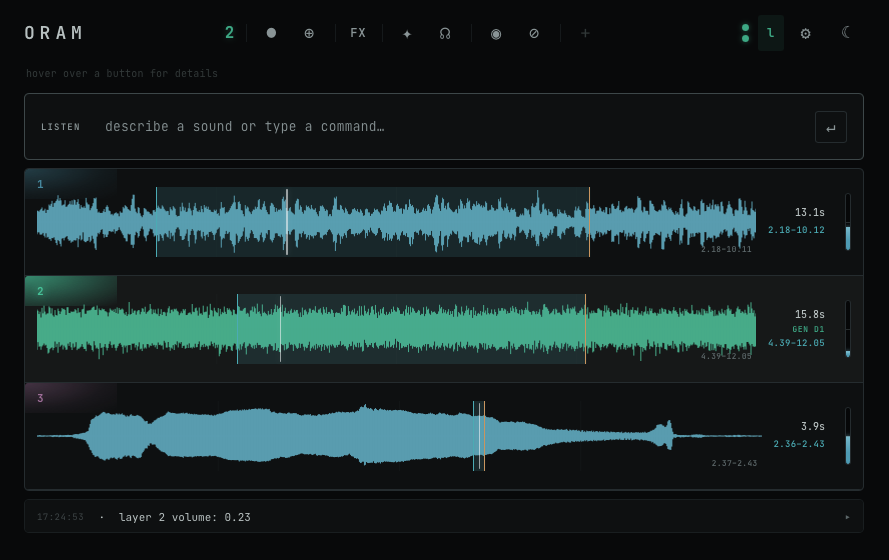
- 2026.04ORAMv0.1 — open-sourcedAgentic looper for sonic discovery and live performance.
- 2026.04Originphonostack foundedA Momoto Studio spinoff, dedicated entirely to sound and listening.
/ Studio
Notephonostack is developed by Momoto Studio, extending years of work in music production, sound design, and experimental audio research into software and agents.